
Building a Connected System for Product Tracking, Manufacturing, HRM and Accounting
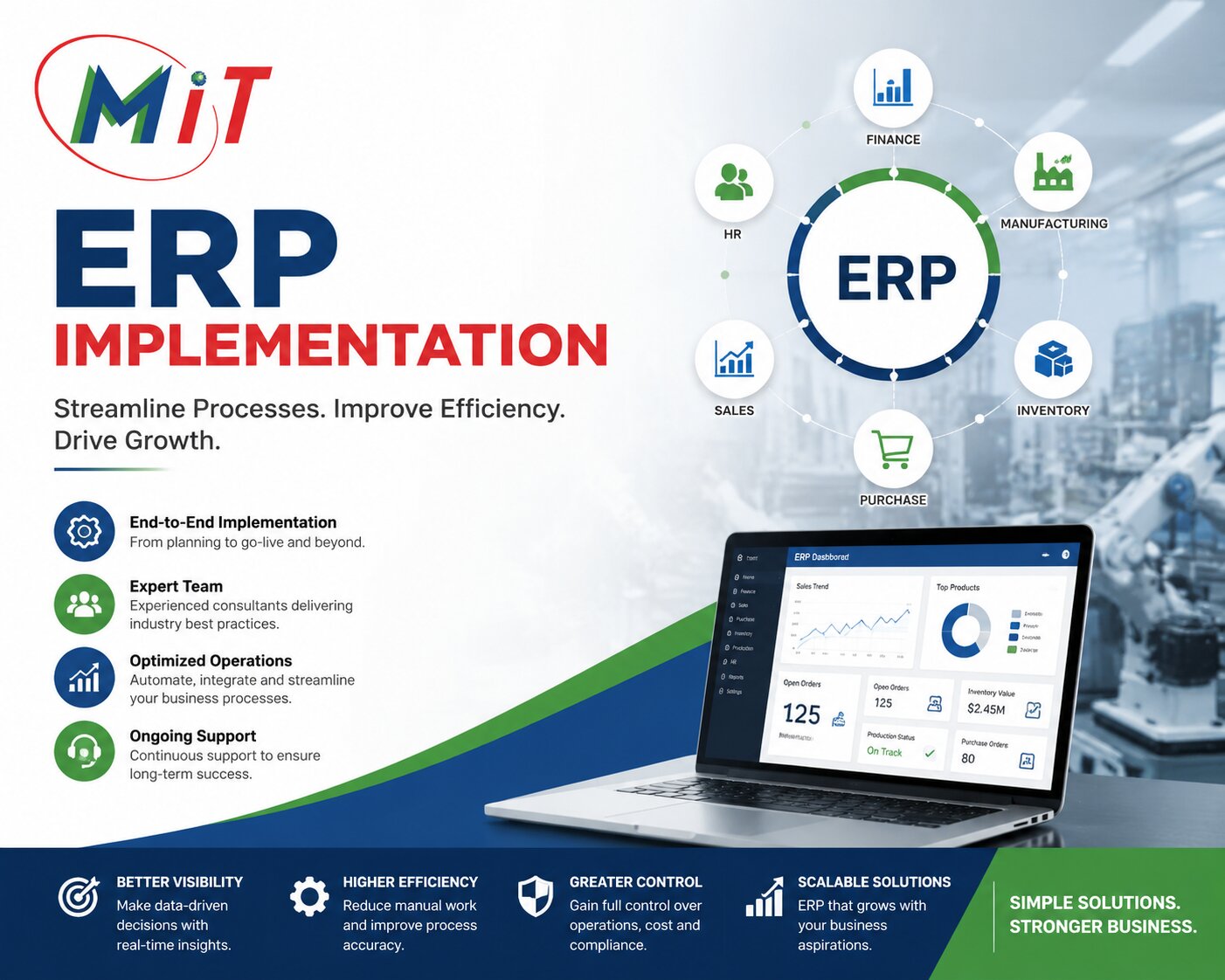
ERP Implementation Refer2Free needed more than a standard e-commerce platform. The business required a centralized software system capable of tracking individual products, validating warranty claims, maintaining accurate inventory, managing employees, controlling manufacturing activities and recording every financial transaction through double-entry accounting.
Using separate applications for these operations would have created duplicated records, inconsistent reports and limited management visibility. MMIT SOFT LTD therefore developed a customized ERP and e-commerce solution that connected the company’s core operational departments through one centralized database.
The resulting platform brought product tracking, warranty management, sales, inventory, HRM, payroll, manufacturing and accounting together within a unified business management system.
Client Challenges
Refer2Free was dealing with several operational problems that could not be solved effectively through spreadsheets or disconnected software.
The major challenge was not simply a lack of software. It was the absence of a reliable connection between products, customers, employees, production activities and financial records.
The project focused on solving six critical business problems.
Product Tracking and Warranty Verification
The Problem
Businesses selling physical products must be able to identify the exact unit sold to each customer. Without unit-level tracking, employees may struggle to verify:
- Whether a product was sold by the business
- Which customer purchased the product
- When the product was purchased
- Whether the warranty period is still active
- Whether the same product has already received warranty service
This lack of traceability can lead to invalid warranty claims, repeated claims, customer disputes and financial loss.
The Solution
MMIT SOFT LTD implemented a serial-number-based product tracking system. Every trackable product unit receives a unique serial number when it enters the system.
The serial number is connected with relevant business records, including:
- Product information
- Purchase or stock entry
- Sales invoice
- Customer record
- Sale date
- Warranty duration
- Warranty status
- Previous claim history
approving service or replacement.
When a customer submits a warranty claim, employees can search the serial number and verify the product’s complete history before
Business Impact
The system helped Refer2Free:
- Reduce the risk of duplicate warranty claims
- Verify warranty eligibility more quickly
- Improve product lifecycle visibility
- Reduce disputes between customers and support teams
- Maintain a traceable service and warranty history
- Protect the business against invalid claims
Centralized Inventory Across Sales Operations
The Problem
Inventory becomes difficult to control when products are sold through multiple sales points or channels. A product may appear available in one record even though it has already been sold elsewhere.
This can result in:
- Overselling
- Order cancellations
- Incorrect stock reports
- Delayed customer delivery
- Unnecessary purchasing
- Poor demand forecasting
Traditional quantity-based stock records also fail to show which exact serialized product unit remains available.
The Slution
The Refer2Free platform was equipped with a centralized inventory engine. Stock data is updated whenever a purchase, sale, return or stock adjustment occurs.
For serialized products, the system records both the total quantity and the status of each individual unit. This allows authorized users to identify whether a particular serial-numbered product is available, sold, returned or under warranty service.
Business Impact
The inventory solution provided:
- Centralized stock visibility
- More accurate available-stock information
- Reduced risk of overselling
- Better coordination between sales and inventory teams
- Improved reorder planning
- Unit-level tracking for serialized products
- Faster investigation of stock discrepancies
HRM and Payroll Automation
The Problem
Manual human resource management creates repetitive work and increases the likelihood of salary disputes. Attendance, leave, overtime, deductions and employee advances may be maintained in separate spreadsheets, making payroll preparation slow and difficult to verify.
Common issues include:
- Incorrect attendance calculations
- Inconsistent overtime records
- Unrecorded leave
- Salary deduction errors
- Delayed payroll processing
- Limited employee history
The Solution
MMIT SOFT LTD integrated an HRM and payroll module into the Refer2Free ERP system.
The module centralizes:
- Employee profiles
- Departments and designations
- Attendance
- Leave records
- Overtime
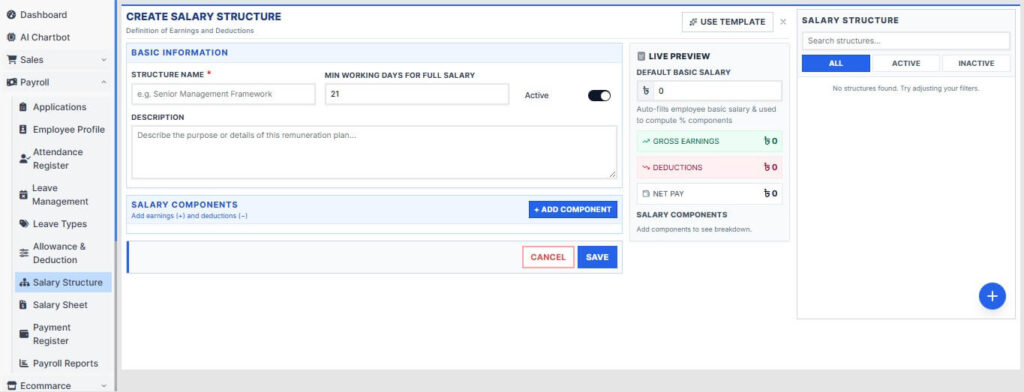
- Salary structures
- Allowances
- Deductions
- Payroll processing
- Salary payment history
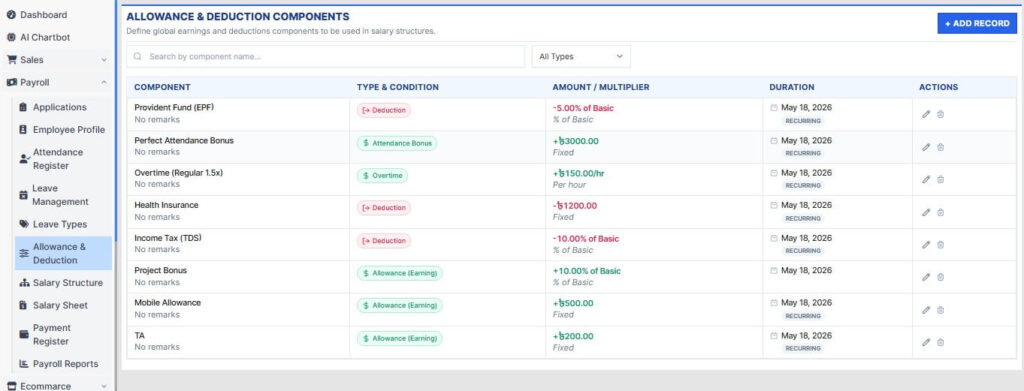
Payroll calculations can be generated according to predefined company rules and approved attendance information. This reduces repeated data entry and creates a transparent record behind each salary calculation.
Business Impact
The HRM and payroll module helped deliver:
- Faster monthly payroll processing
- Reduced dependency on spreadsheets
- Consistent salary calculations
- Better employee record management
- Greater transparency around allowances and deductions
- Reduced administrative workload
- Easier review of payroll history
Connected Manufacturing Management
The Problem
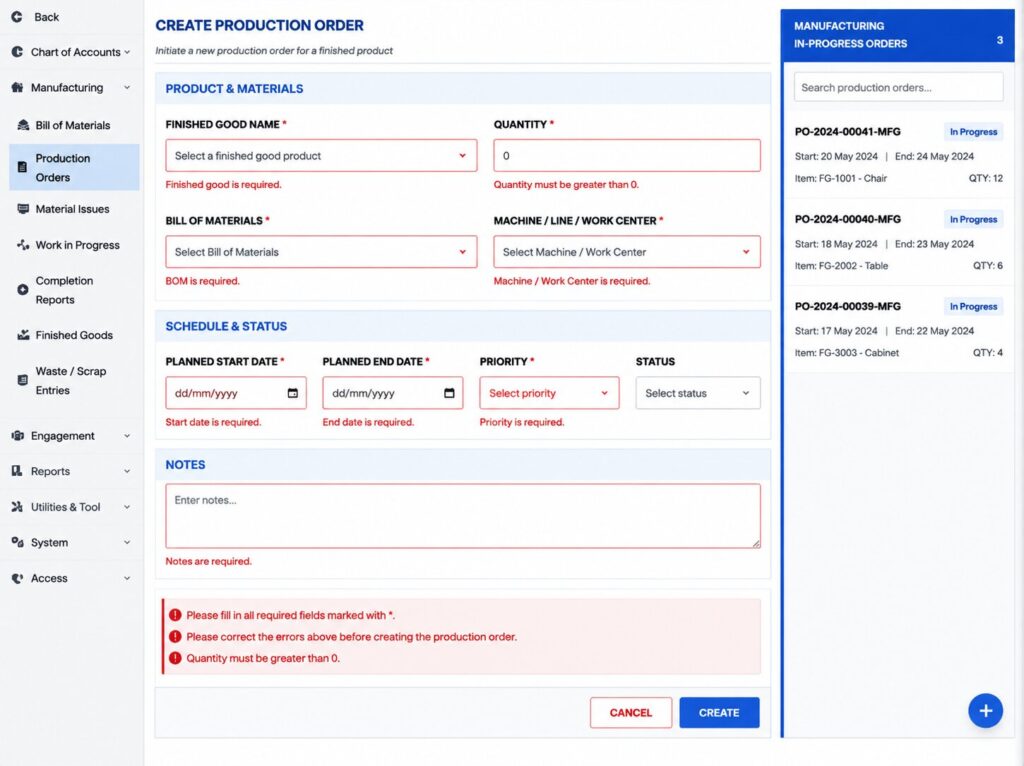
Manufacturing businesses need to understand how raw materials are converted into finished products. Without a structured manufacturing workflow, the company cannot reliably calculate production costs or identify material wastage.
Disconnected records often make it difficult to answer essential questions:
- How much raw material was issued?
- Which production batch used the material?
- How many finished products were produced?
- Was any material wasted?
- What was the actual cost of production?
- How much finished stock entered inventory?
The Solution
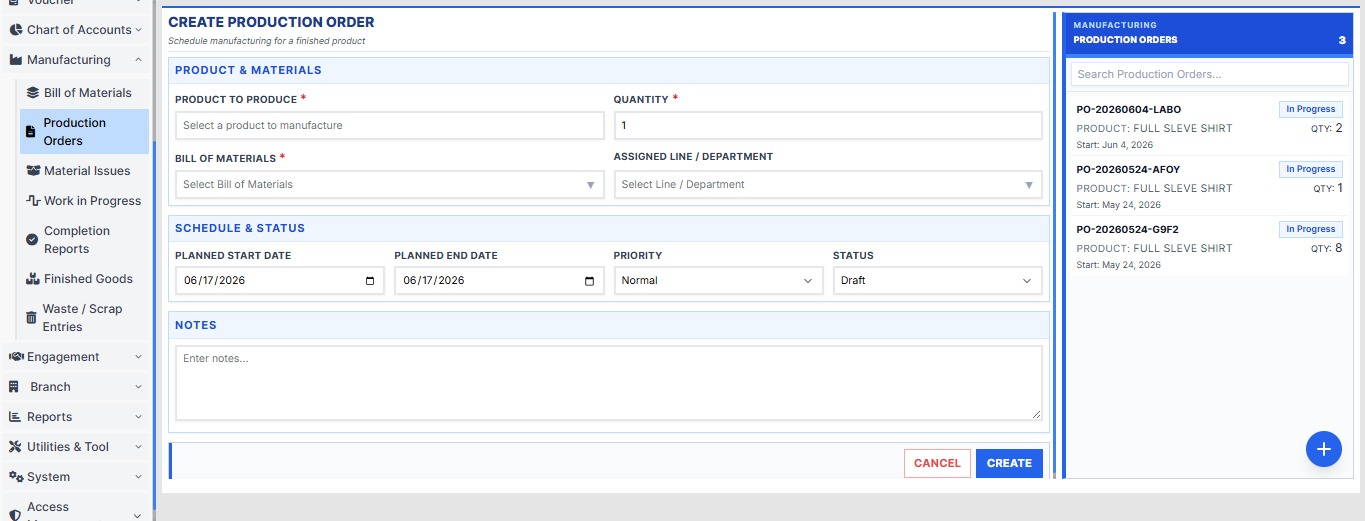
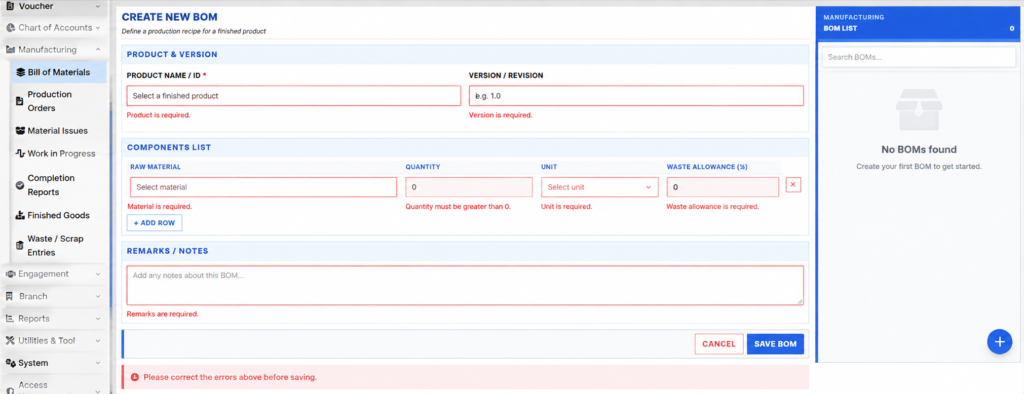
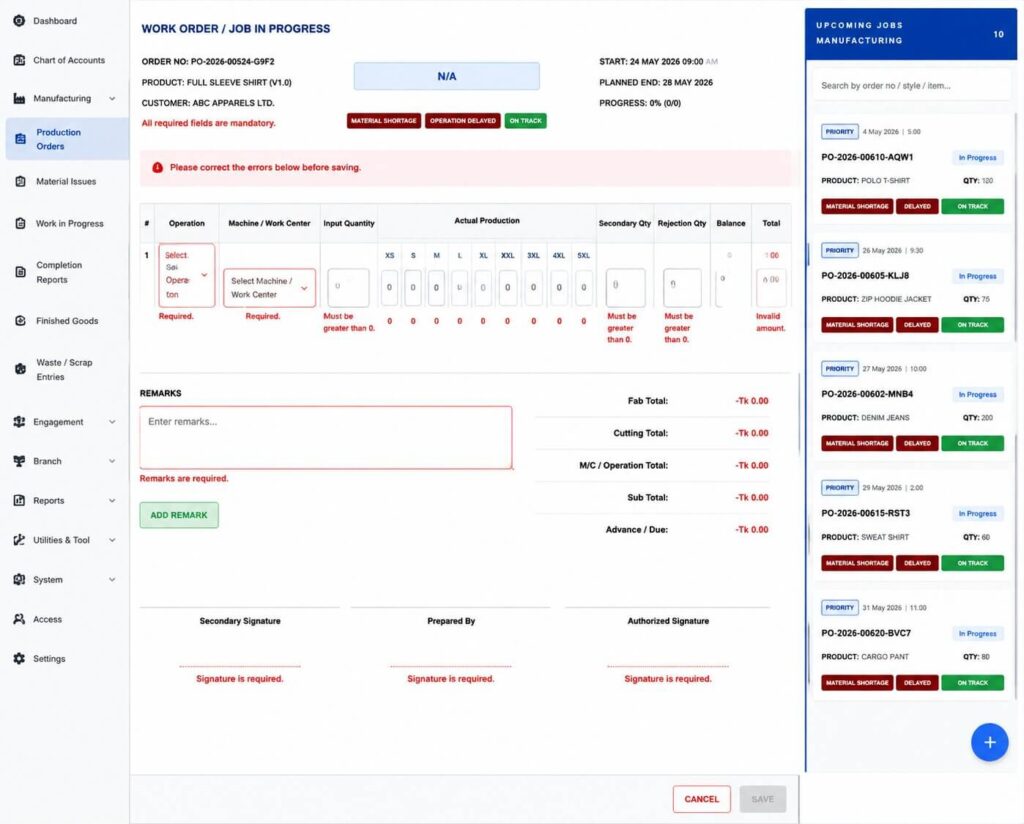
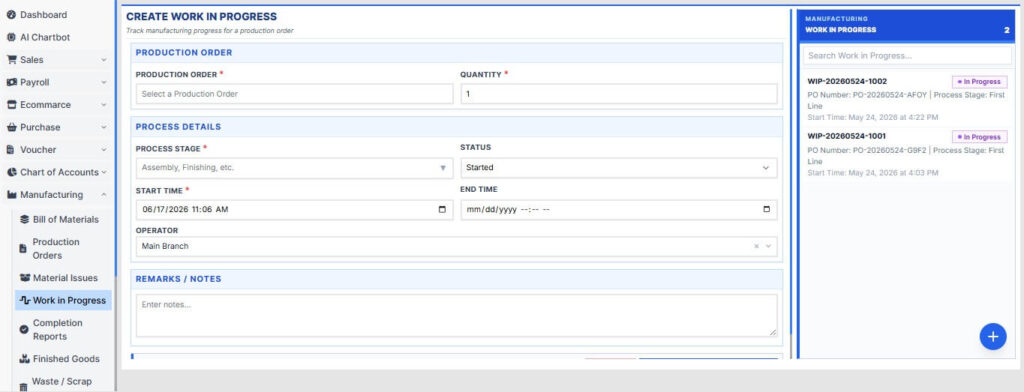
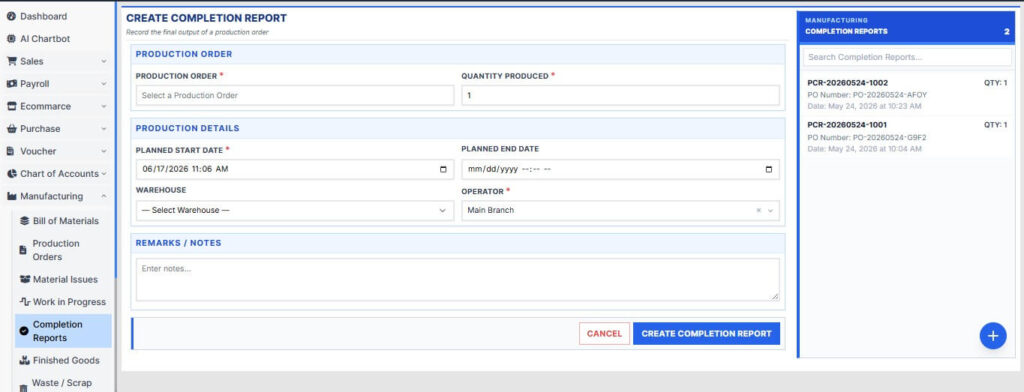
The custom manufacturing module connects raw material consumption with production processes and finished-goods entry.
The workflow covers:
- Raw material stock entry
- Material issuance for production
- Production batch or cycle creation
- Production-stage recording
- Wastage or variance entry
- Finished-goods completion
- Finished-product inventory update
- Production cost calculation
This creates a traceable relationship between materials, production output and inventory.
Business Impact
The manufacturing system enabled Refer2Free to achieve:
- Better visibility into raw material consumption
- Structured production workflows
- More accurate production costing
- Improved tracking of material wastage
- Direct finished-goods stock updates
- Better comparison between planned and actual output
- Stronger production accountability
ERP Implementation Management
The Problem
Basic accounting tools often record only income and expenses without maintaining a complete financial relationship between business transactions.
When sales, purchases, payroll, inventory and manufacturing records are maintained separately, finance teams must repeatedly transfer information into the accounting system. This increases the risk of missing entries, incorrect balances and delayed financial reporting.
The Solution
The accounting component supports financial records such as:
- Chart of accounts
- Journal entries
- Cash and bank transactions
- Customer receivables
- Supplier payables
- Sales records
- Purchase records
- Payroll expenses
- Manufacturing-related costs
- General ledger
- Trial balance
- Profit and loss statement
- Balance sheet
- Transaction audit history
MMIT SOFT LTD integrated a double-entry accounting system into the Refer2Free platform.
Under double-entry accounting, each financial transaction creates balanced debit and credit entries. Relevant activities from connected modules can flow into the accounting ledger according to configured accounting rules.
Business Impact
The accounting integration provided:
- More consistent financial records
- Reduced duplicate data entry
- Better visibility into income and expenses
- Faster preparation of financial reports
- Traceable transaction history
- Improved receivable and payable monitoring
- Stronger control over financial operations
One Centralized ERP for Business Control
The Problem
Using different tools for e-commerce, inventory, HR, manufacturing and accounting creates fragmented business data.
A sales transaction may reduce inventory but remain absent from accounting. Payroll may be completed without updating salary expenses. Finished products may be manufactured but not reflected accurately in stock.
This prevents management from working with a dependable single source of truth.
The Solution
Refer2Free was developed as an integrated ERP environment rather than a collection of independent modules.
The centralized architecture connects:
- E-commerce operations
- Sales
- Customer management
- Serial-number tracking
- Warranty management
- Inventory
- HRM
- Payroll
- Manufacturing
- Accounting
- Management reporting
Authorized users can access relevant information according to their roles, while management receives a broader view of business performance from the unified dashboard.
Business Impact
The centralized ERP system created:
- Consistent information across departments
- Reduced dependence on disconnected software
- Faster access to operational data
- Improved collaboration between teams
- Better management reporting
- A more scalable technology foundation
- Greater control over day-to-day business activities
Our Custom Software Development Approach
MMIT SOFT LTD did not treat Refer2Free as a ready-made software installation. The project required an understanding of how the company’s products, employees, production activities and financial transactions were connected.
The development process included:
Business Process Analysis
The team reviewed existing workflows, reporting requirements, operational pain points and department-level dependencies.
Requirement Mapping
Each requirement was mapped to the appropriate module, user role, approval process and reporting function. Integration availability depends on third-party service rules and project feasibility.
System Architecture
A centralized architecture was designed to prevent duplicate records and allow data to move between connected modules. The final timeline will be confirmed after requirement analysis and approval.
Custom Development
Features were developed according to Refer2Free’s actual business workflows rather than forcing the company to follow a generic software structure.
User Training and Support
Relevant users were introduced to the system workflows so that the software could be used consistently across departments.
Frequently Asked Questions
MMIT SOFT LTD is not just a software company. It is a business problem-solving partner for companies in Bangladesh. By focusing on real operational challenges and delivering tailored systems, we help businesses move from manual inefficiency to structured growth.
MMIT SOFT LTD developed an integrated e-commerce and ERP solution covering serial-based product tracking, warranty management, inventory, HRM, payroll, manufacturing and double-entry accounting.
Each individual product unit is assigned a unique serial number. The number is connected with stock entry, sales, customer information, warranty duration and previous claim history.
The system helps employees verify whether a product was sold by the company, whether its warranty remains active and whether previous claims exist. Final claim approval remains subject to the company’s warranty policy.
The centralized inventory module updates stock when a completed sales transaction is recorded according to the configured workflow.
Yes. The manufacturing module can track raw materials issued for production and finished products added to inventory.
The payroll module can calculate salaries using approved attendance, leave, overtime, allowances and deductions based on predefined company rules.
Double-entry accounting records every financial transaction through corresponding debit and credit entries. This helps maintain balanced and traceable financial records.
Authorized management users can review connected operational and financial information through centralized reports and dashboards.
No. Similar modules can be customized for manufacturing companies, distributors, retailers, wholesalers, service providers and multi-branch businesses.